

On a wet evening in February, our team were joined by a handful of clients for a private dinner with Brad Grimes to showcase the Abreu wines. Whilst we waited for everyone to arrive, and with a glass of Pol Roger Champagne in hand, we asked some quick-fire questions to Brad for our latest edition of The Mini Pour…

LWT: What’s your name & position at the winery?
BG: My name is Brad Grimes, and I make the Abreu wines.
LWT: What was the moment you knew you wanted to become a winemaker?
BG: I’m not sure if that moment has ever come! I’ve always made things. So I made food primarily; I grew up in kitchens and I was just a ‘maker’. When did I become a ‘wine-maker’? I was sort of handed over the responsibilities, all the responsibilities at Abreu in 2002. But then that position is always evolving, so I think true ‘makers’ are always going to be the most self-loathing and have the least amount of confidence in some ways, but then the most amount of confidence in other ways. I don’t know if I’ve ever fully, in my mind, achieved that full title of ‘winemaker’. I’m more of a janitor and a cellar master. I still cook. I play records. I just make. So, you know, that term gets thrown around a lot, but I am the actual person that makes the wine with my hands. I don’t consult. I don’t write work orders. I don’t work with anyone. So, yeah, I just make.

LWT: You’ve been quoted as describing Abreu’s work as circular. Can you explain what this means and how you feel it impacts the way you make your wine?
BG: We are a complete circle in the sense that we own all the vineyards, we farm everything ourselves, we have our own winery and we do everything ourselves. So we are completely insulated from different logistical hazards that exist out in the winemaking world. But in a winemaking sense, it is also very circular. I mean, if we start at harvest time, then we’re picking grapes and making wine, and then the calendar flips, and, you know, I’m in London right now, and I have wines that have gone through malo, and I’m following those wines. I’m actively looking at the 2024s and putting blends together. All of that will come together at some time in this summer. Then I’ll rack all the 25s, put all the white wines in the tank that are blended, and then harvest again. So it does just keeps going around and around and around.
LWT: What’s one thing that people should know about the unique terroir of each of the Abreu vineyards?
BG: Cappella is a vineyard in St. Helena that’s one contiguous piece of soil, just one soil series which is gravelly loam. All the vines are planted in the same vintage and they’re all in the same row direction. That being said, there is some difference that exists in that vineyard, as there are difference in all vineyards. That’s Capella – a very narrow, rectangular vineyard in the middle of town.
Just to the north is Madrona. Madrona is 23 acres. It’s sort of the complete opposite of Cappella, so there’s four different soil series. There’s many different rootstocks, scion woods, vine ages, exposures, so it’s a complete swirl. There’s many different colours, many different aspects.
Thorevilos is a bit wild. It’s up in the eastern hills of St. Helena where there’s just a bunch of rock outcrop and not many vineyards. It’s just what I call sort of the ‘badlands’, the ‘wildlands’. Those lines tend to kind of accentuate that wildness.
And then Las Posadas up on Howell Mountain is our expression of Howell Mountain. So it’s a section of Howell Mountain that’s very separate from what people know Howell Mountain to be, which is more like Randy Dunn in this section that’s very north. We’re on this other park that’s very south, so where La Jota and Bancroft Ranch exists. And that’s where we drew a lot of inspiration for Las Posadas, which is kind of based on all the fruits that we grow at Madrona (Cabernet Sauvignon, Cabernet Franc, Petit Verdot, Merlot, also we have some Malbec). And then it’s on this unbelievable soil called red Aiken, which is a really iron-rich, red, rocky soil. So it’s the way in which Cabernet and Cabernet Franc can exist on Howell Mountain that make this wine in ‘our’ way.

LWT: Of the vintages that we’re tasting tonight, is there a particular one that stands out to you?
BG: So we tasted the 2017s two days ago. I hadn’t tasted those wines in a while. But I think it’s a very, very good time to taste those wines. I always tell people, if you know the wines, then seven years past vintage is a good time to check in. I was really happy with the wines. ’17 is not known to be a great vintage in that valley; it was cool and then really hot, and then the fires came at the very end of harvest (we didn’t have impact from that). I think the wines now are showing some age, but they still have a great youthfulness. I want people to drink wines, and I don’t think there’s a ‘perfect’ drinking window. It’s up to everyone’s own personal palate. In the wines I tasted a couple days ago and what we’re having tonight, there’s nothing in the 2017s that would tell me not to open them. Open them, enjoy them. Certainly there is life and energy in the wines, and there’s going to be pleasure years from now, but they’re delicious.
LWT: Outside of Napa Valley, if you could create a wine from any vineyard in the world, where would it be and why?
BG: It’s very easy to say Chablis, but I think that I am most enamoured and sort of jealous of all the young people in the very south of Champagne. So where Hannah and Raphaël Piconnet are, and Clandestin, and Cedric Bouchard who’s a friend of mine, like that area in Celles-sur-Seine, way south. I’m too old, I think, to do that work now, but to go there and make Champagne would be cool.
LWT: How do you feel that your background as a Chef, with a focus on ingredients and precision, influences your winemaking?
BG: In many ways, just from a basic work standpoint, I’m always coming into work and it’s ‘mise en place’, like everything has to be in its place. So I still work in that way – probably to the detriment of myself and efficiency, but I always have to have things clean and ready before I can actually work. I always try to set myself up in that way. And then with the grapes, because I’m co-fermenting so much, it is sort of correct to say that I’m just cooking with grapes. It’s matching flavours, it’s tasting grapes. For example, from a property like Madrona where we’re picking many different sections of Madrona in one day, but then only ending up with like two tons of fruit. That goes into one tank and all this co-ferment of things from around the property. And I think that’s no different than wandering around Borough Market and shopping for ingredients and going home and cooking.

LWT: Which wine producer would be your ultimate dinner party guest?
BG: I want to say Didier Dagueneau, but that would be a disservice to Benjamin because I love Benjamin Daganeau so much. I never met Didier, but I really feel for Benjamin because everyone talks about his dad, and he carries that so heavily. I love Maggie Harrison so much, but we know each other. Who would I want to have? You know, Vincent Dauvissat. Vincent Dauvissat is such a beautiful person. I’ve only met him once but he’s so kind and so nice and I probably don’t drink enough of his wines – I did this week!
LWT: If someone’s going to open a bottle of your wine tonight, what should they pair it with ?
BG: Whatever they want to! I had this conversation last night because we were debating over red wine or white wine. I can always go white wine. I watch people drink a half bottle of Pouilly-Fuissé with a Chateaubriand at Andrew Edmunds the other day but I’m not going to shame them in saying that’s not right. But I can’t do the opposite. I can’t drink a red wine with oysters, or something like that. But you know what? If you want to, go for it. Traditionally with red wines like ours, people eat meat. I tend to focus more on game, so when people come to the winery, unless they have an aversion to food, I typically cook duck or squab, or pheasant or quail, something along those lines. Even chicken. I try to eat more chicken and fish than red meat. So I try to then make dishes in a way that have more robust flavours that can match with the red wine. There’s also a way in which red wine, red wine with a certain acidity, even though it has a lot of flavour certainly needs some fat sometimes. But the fat can be in different forms, like with a fatty fish, like a salmon or something like that. So it’s really about what’s going to make people happy. There are soft rules, but there are no hard rules. Just eat and drink what you like!

2016 Abreu, Madrona Ranch, Napa Valley 6x75cl

2015 Abreu, Cappella, Napa Valley 3x75cl
2019 Abreu, Cappella, Napa Valley 3x75cl
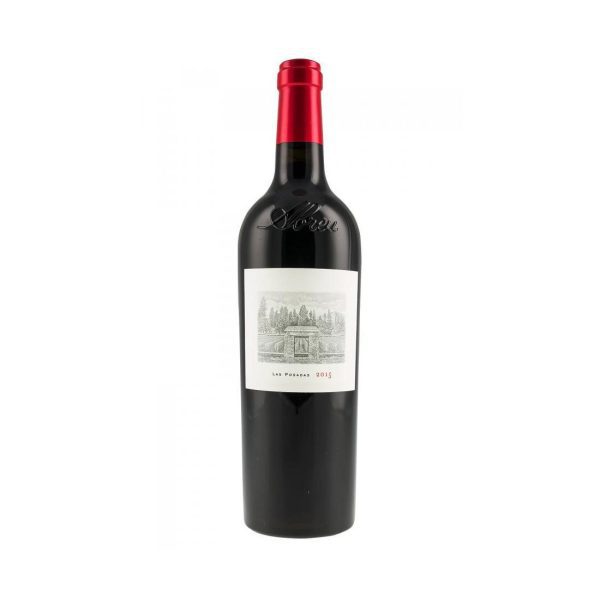
2009 Abreu, Howell Mountain, Howell Mountain 1x150cl
2015 Abreu, Las Posadas, Howell Mountain 3x75cl
2019 Abreu, Madrona Ranch, Napa Valley 3x75cl

2021 Abreu, Rothwell Hyde, Napa Valley 6x75cl
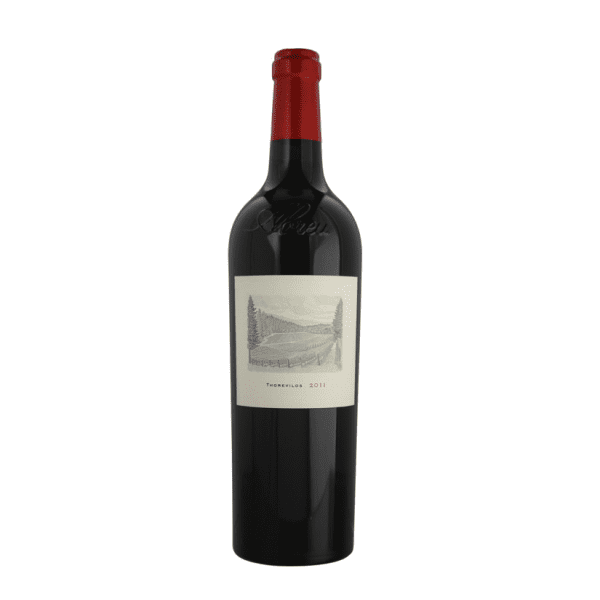
2008 Abreu, Thorevilos, Napa Valley 3x75cl
2019 Abreu, Thorevilos, Napa Valley 3x75cl
2014 Abreu, Thorevilos, Napa Valley 3x75cl
2011 Abreu, Las Posadas, Howell Mountain 3x75cl


